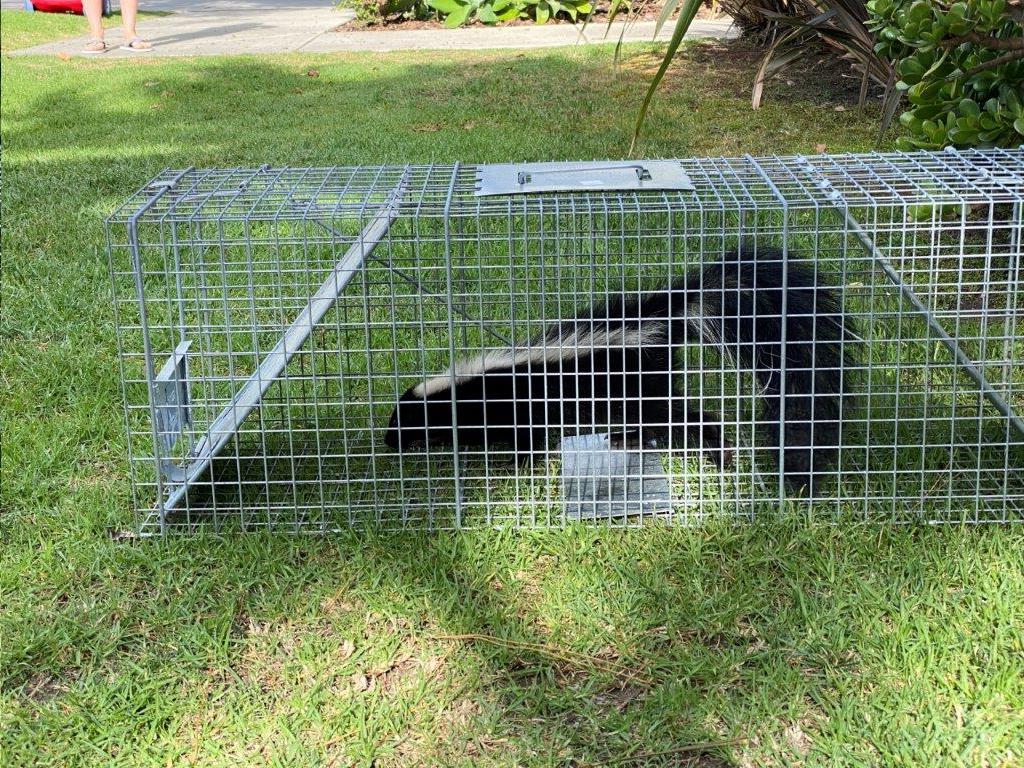
Skunks are very flexible creatures, and they can live practically anywhere, as long as there is food, water, and shelter. To build their shelter, skunks will dig dens using their very strong front claws, and the entrances of these dens will usually be a medium-sized hole in the ground. They might also opt for pre-made dens that are abandoned by other animals, and these can be hollow logs, brush piles, and woodpiles. Sometimes, they can also be found living very close to humans because of easy access to food and water, so it wouldn’t be much of a surprise to see them under porches, in barns, garages, and sheds, or any dark and cozy places.
Their flexibility is sort of bad news for us humans since they might be living under our porches without us even knowing about it. One of the best ways to actually prevent them from even being on the property is to build a fence. Fences can keep out a lot of different kinds of animals, from small ones such as raccoons and possums to larger animals such as deer and bears. Here’s everything that you need to know when building a skunk-proof fence!
Skunks are not expert climbers, so you don’t need to worry about building a very tall fence. When it comes to medium, non-climbing animals such as coyotes, skunks, and groundhogs, a low fence of about 4 to 5 feet will do the trick.
Keep in mind, however, that while they aren’t climbers, they are avid burrowers. Make sure to dig at least a foot under your fence so that they can’t get in.
For extra protection and security, surround your underground fence with wire mesh so that they can’t get in. Remember, skunks can fit into holes as small as 4 inches, so buy a wire mesh with smaller squares.
You can also use this trick with your decks and porches. Keep them closed by building some sort of wire mesh wall that closes all openings into your deck or porch and make sure to bury this around about a foot as well.
If you don’t like using mesh, you can also make fences made of wood, metal, or concrete.
Another way to prevent skunks from digging through your foundation is to slide mesh flat on the ground. This prevents them from digging under and possibly hitting important foundations. Place a few rocks or bricks along the wire mesh’s sides to prevent them from moving it.
This can also be done all throughout your garden and lawn, especially if you want to prevent skunks from digging through your beautiful landscape, or through your well-cared-for crops. Purchase bird netting (also called fruit tree netting) from your local garden shop and lay the netting on the ground. Try to bunch up the edges like you are building up “valleys” on the sides of the net. This will discourage skunks from even stepping into them since they think it is dangerous.
Tips When Choosing a Fence
There are different kinds of fences out there, and each of them has a different purpose. Regardless, here are some universal tips that can help you decide which fence you should go with.
Check with your local laws on fencing, as there are different kinds of fences that might be illegal in your areas. Some areas have a height and/or size limit to fences, and it would be a very expensive problem to have to put up a fence, only to find out that it is illegal.
“Out of sight out of mind” can also apply to wildlife, and they won’t bother you if they don’t see anything worth bothering you for. This is why solid fences that completely block the view are good options because animals will not see into your yard and spot your bird feeder or any other food source.
Aside from wood, wire, metal, and concrete fences, there are new fences on the market that are electric. They are more expensive than traditional ones, but they are also more pleasing to the eye. Note: Make sure that electric fences and their voltage is legal in your state, as killing animals by electric fence might be a crime.
Go back to the Pawtucket wildlife removal home page.